Why Sectional Tree Felling Is Ideal for Restricted Spaces
Removing a tree from a spacious, open site can sometimes allow it to be felled in a relatively straightforward manner. In a smaller garden or restricted area, however, there may simply not be enough clear space for the entire tree to come down safely as one piece. Buildings, fences, sheds, patios, neighbouring garden features and other trees can all limit the available working area.
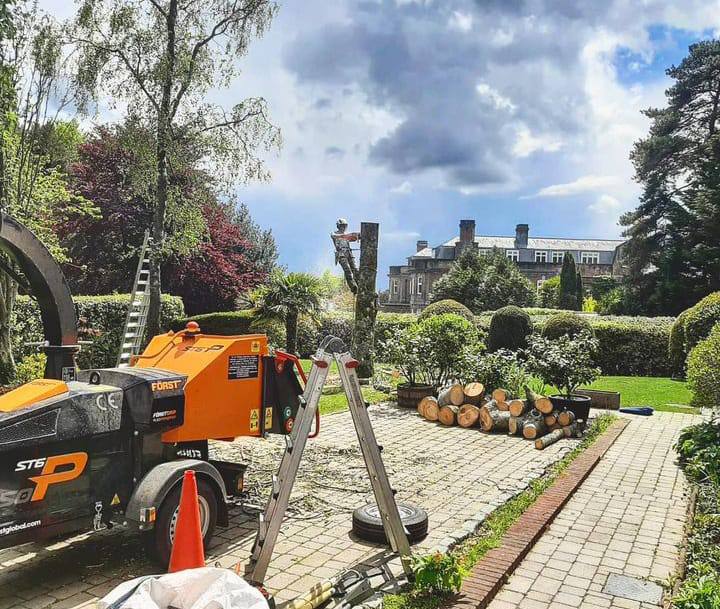
For properties in Kirkby in Ashfield, Nottinghamshire, sectional tree felling provides a controlled approach to tree removal where space is limited. Rather than bringing down the complete tree at once, a tree surgeon dismantles it progressively, removing manageable sections of the crown, branches and stem.
This method allows the work to be adapted to the individual surroundings and is particularly valuable where careful control is more important than speed.
How Does Sectional Tree Felling Work in Restricted Spaces?
Sectional tree felling involves dismantling a tree in planned stages. The tree surgeon generally works through the crown before progressively reducing the remaining stem, with individual sections carefully managed as they are removed.
The precise technique depends on the tree’s size, condition, position and surroundings. Some material may be able to descend directly into a suitable working area, while other sections may require additional control to prevent them from reaching nearby features.
The fundamental advantage is that the tree is removed according to the available space rather than requiring a large open area for the complete tree to fall.
Restricted Gardens Often Leave No Clear Felling Direction
Conventional tree felling requires sufficient clear space in the intended direction of fall.
In established gardens, this space may not exist. A tree could be positioned between a house and boundary, alongside a shed or surrounded by landscaping that needs to remain undisturbed.
Sectional dismantling removes the need to accommodate the full height of the tree on the ground at one time.
The Tree Is Reduced in Manageable Sections
The defining feature of sectional felling is controlled dismantling.
Rather than treating the tree as one large object, the tree surgeon divides the removal into manageable sections. Branches can be removed individually before larger limbs and sections of the stem are addressed.
This creates far greater control over where material is handled within a confined site.
Work Usually Begins With the Crown
Where the tree and working conditions allow, dismantling commonly begins with the branches forming the crown.
Removing these progressively reduces the tree’s overall spread and creates more working space around the remaining structure. Smaller branches can often be handled more easily than attempting to manage large sections containing numerous limbs at once.
Once the crown has been reduced, attention can move towards the remaining stem.
Larger Branches Require Careful Planning
A mature branch can be substantial in both weight and spread.
Even where there appears to be sufficient space below it, its shape may make uncontrolled removal unsuitable. Branches can extend over fences, planting areas, paths or other features that need to remain protected.
Breaking the work into smaller sections allows the tree surgeon to adapt the removal to the particular obstacles around the tree.
Rigging Can Provide Additional Control
In particularly restricted situations, sections cannot always be allowed to fall directly to the ground.
Appropriate rigging techniques can be used to control branches and timber during the dismantling process. Sections can be supported and lowered into a suitable working area rather than being allowed to descend freely.
This level of control is one of the reasons professional sectional felling is so useful where the available drop zone is limited.
Nearby Buildings Make Controlled Removal Particularly Important
Trees growing close to properties require careful consideration during removal.
Branches may extend towards roofs, walls or windows, while the stem itself may stand only a relatively short distance from the building. There may be no suitable direction in which the complete tree could be felled without encountering part of the property.
Sectional felling allows the tree to be made progressively smaller while maintaining greater control over the material being removed.
Fences and Boundaries Can Restrict the Working Area
Garden boundaries frequently sit close to established trees.
A conventional fall may cross the boundary or place unnecessary pressure on fencing. Even smaller branches can cause damage if they are allowed to descend without sufficient control.
Dismantling the tree section by section allows the work to take account of the available space within the property.
Sheds and Garden Structures Can Remain Close to the Tree
Restricted gardens often contain several fixed features competing for space.
Sheds, outbuildings and other structures may leave only a relatively small area beneath or alongside the tree. Moving these features may not be practical simply to create a larger working zone.
Sectional felling provides a way of adapting the removal process to the existing layout.
Patios and Established Landscaping Can Be Considered
The absence of buildings does not necessarily mean a garden provides an unrestricted working area.
Patios, paths, raised beds and established planting may all be positioned beneath or around the canopy. Allowing large sections of timber to fall directly onto these areas could cause unnecessary disturbance.
Controlled dismantling allows the removal process to take these features into consideration.
Other Trees Can Also Limit Available Space
Sometimes the restriction around a tree is created by surrounding vegetation rather than buildings.
Neighbouring trees may have overlapping crowns, while established shrubs and hedges can occupy much of the ground-level working area. Removing one tree without unnecessarily disturbing the surrounding planting requires careful planning.
Sectional techniques allow the work to be adjusted to the shape and position of nearby vegetation.
Access Can Influence How the Tree Is Dismantled
Some gardens have narrow side passages, limited gateways or restricted routes between the tree and the point where removed material can be processed.
This does not necessarily prevent tree removal, but it can influence how large each section should be. Material needs to be manageable not only while it comes down but also while it is moved through the site.
A professional assessment considers the complete working process rather than focusing only on the tree itself.
Tree Size Matters Less When It Can Be Progressively Reduced
A tall tree can appear particularly difficult to remove from a small garden because its full height may be several times greater than the available ground space.
Sectional felling addresses this by progressively reducing the tree. Once branches have been removed, the remaining stem can be shortened in stages rather than being felled at its original height.
This makes the technique suitable for situations where the dimensions of the tree significantly exceed the available drop zone.
Stem Sections Can Be Removed Progressively
After the crown has been dismantled, the remaining trunk can still represent a substantial amount of timber.
Instead of bringing down the complete stem, it can be reduced in appropriate sections. The size of each section is determined by the tree, working area and method being used.
This continues the same controlled approach until the required tree removal has been completed.
Section Size Can Be Adapted to the Available Space
One of the major advantages of sectional felling is flexibility.
A larger working area may allow relatively substantial sections to be managed efficiently. A very restricted area may require smaller pieces and more controlled handling.
There is no need to use the same dismantling method for every tree. The process can be planned around the actual conditions present.
Tree Condition Can Influence the Approach
Not every tree being removed is in the same structural condition.
Some may be generally sound but unsuitable for their position, while others may contain dead branches, damaged sections or significant deterioration. These differences can affect how the tree should be dismantled and which areas require particular care.
Professional assessment before work begins helps determine an appropriate sequence.
Sectional Felling Is a Planned Process
Successful dismantling is not simply a matter of cutting branches into smaller pieces.
The sequence of removal matters. Tree surgeons need to consider the balance of the crown, position of branches, available working space and how each removed section will be handled.
Planning the work before making significant cuts helps maintain control throughout the process.
The Drop Zone Can Be Kept Much Smaller
One of the most practical benefits of sectional tree felling is the reduced space required beneath the tree.
Because individual sections are smaller than the complete tree, the working area can be concentrated within a more limited zone. Where rigging is appropriate, the area into which sections are brought can be controlled further.
This makes sectional dismantling particularly useful in compact residential gardens.
It Can Reduce Unnecessary Disturbance Around the Garden
Tree removal inevitably involves handling branches and timber, but the method chosen can influence how much of the surrounding garden is affected.
Controlled sectional work allows material to be directed towards suitable working areas rather than spreading the impact across the complete garden. Existing features can be considered when planning how branches and timber will be brought down and removed.
For homeowners who want to retain the rest of their established garden, this is an important advantage.
Sectional Felling Does Not Mean Every Tree Must Be Removed This Way
Sectional dismantling is a specialist solution for circumstances where greater control is required.
If a tree stands in a sufficiently open position with an appropriate clear area, another felling method may be suitable. There is little value in making the process more complex than the site requires.
The correct approach should always be determined by the individual tree and its surroundings.
Professional Assessment Determines the Appropriate Method
Looking at a tree from ground level does not always reveal how complex its removal may be.
Its height, branch distribution, condition, proximity to structures and available access all need to be considered. The space required for processing and removing material from the site is also relevant.
A professional tree surgeon can assess these factors and determine whether sectional felling provides the most appropriate approach.
Why Sectional Tree Felling Requires Professional Skill
Working on a tree in sections involves controlling substantial pieces of timber while operating within a limited area.
Accurate cutting, appropriate equipment and an understanding of how branches and stem sections will respond as they are removed are all essential. Where lowering techniques are required, coordination between those working in the tree and on the ground becomes particularly important.
Professional tree surgery combines these skills to keep the dismantling process controlled from beginning to end.
Communication Between the Tree Surgeon and Ground Team Matters
Sectional tree felling is often a coordinated operation.
The tree surgeon carrying out the dismantling may rely on a ground team to manage ropes, receive sections and move material away from the working area. Clear coordination helps ensure each stage is completed before the next section is removed.
This teamwork becomes especially valuable where the available space is restricted.
The Surrounding Area Should Be Considered Before Work Begins
A restricted-space tree removal should be planned around more than the trunk itself.
The position of buildings, fences, garden structures, planting and access routes can all influence the method used. Establishing where material can be handled and processed helps create a logical sequence for the work.
Careful preparation can make a complicated-looking removal much more manageable.
Sectional Felling Can Be Suitable for Awkwardly Positioned Trees
Some trees are not exceptionally large but are difficult to remove because of where they are growing.
A tree situated in a corner, between fixed features or immediately alongside a boundary may have almost no suitable direction for conventional felling. In such situations, positioning can be more important than overall tree size.
Sectional dismantling provides the flexibility required to work with these awkward locations.
Why Professional Sectional Tree Felling Adds Value
Restricted-space tree removal requires decisions to be made according to the individual tree and everything surrounding it.
At Kirkby in Ashfield Tree Surgeons, we assess the tree’s size, condition, position and available working area before determining an appropriate method. Where sectional felling is suitable, the tree can be dismantled progressively with individual branches and stem sections managed according to the space available.
For properties in Kirkby in Ashfield, Nottinghamshire, this provides a practical approach to removing trees where buildings, boundaries or established garden features make conventional felling unsuitable.
A Controlled Approach Avoids Unnecessary Work
Not every restricted garden requires the same equipment or dismantling technique.
Some trees may allow sections to be managed directly within a suitable working area, while others require more controlled lowering. Assessing the site beforehand allows the method to match the actual level of restriction.
This proportionate approach keeps the focus on completing the required tree work efficiently while respecting the surrounding property.
Conclusion
Sectional tree felling is ideal for restricted spaces because it removes the need for enough open ground to accommodate the complete tree. Instead, branches, larger limbs and sections of the stem are removed progressively, allowing the dismantling process to be adapted to the space available.
This approach is particularly useful where trees stand close to buildings, fences, garden structures, patios, planting or other features that limit the working area. Careful planning and, where appropriate, controlled lowering techniques allow each stage of the removal to be managed according to the surroundings.
If you have a tree that needs removing from a restricted area in Kirkby in Ashfield, Nottinghamshire, contact Kirkby in Ashfield Tree Surgeons. We can assess the tree and surrounding space and recommend an appropriate tree felling method based on the conditions found.
Call us on: 01623 700 895
Click here to find out more about Kirkby in Ashfield Tree Surgeons
Click here to complete our contact form and see how we can help with your trees needs.